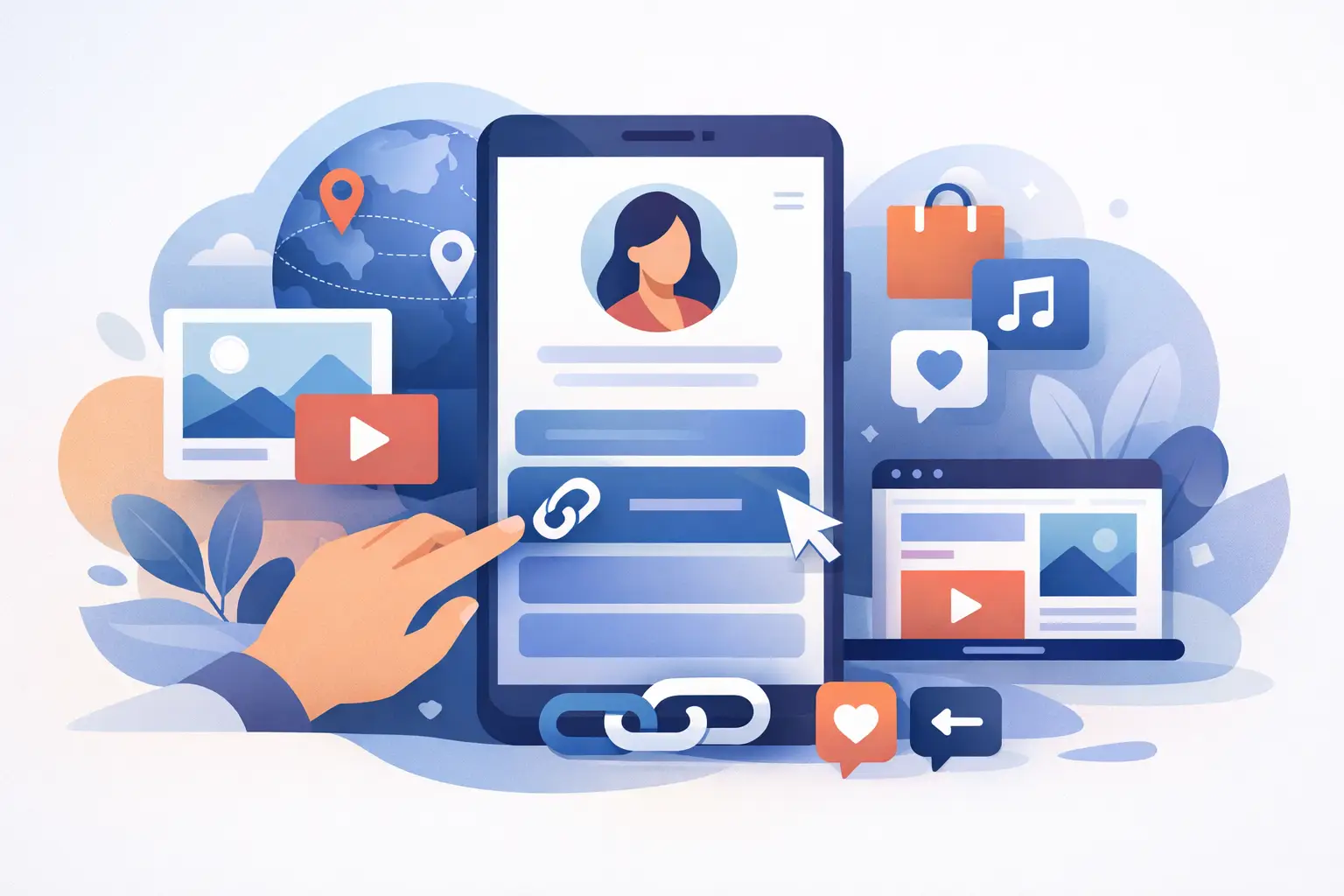
You have probably seen it a hundred times: link in bio. Maybe on Instagram, TikTok, YouTube Shorts, or an artist’s profile after a new single drops. If you are asking what is link on my bio, the short answer is simple. It means a single page linked from a social profile that sends fans to everything important in one place.
For musicians, that one page can do a lot of heavy lifting. It can point fans to your latest release, tickets, merch, mailing list, support page, and socials without forcing them to hunt around. That matters because attention on social is short. If someone taps your profile, you have a small window to turn curiosity into action.
What is link on my bio, really?
The phrase itself is usually a slightly muddled version of link in bio. People search it in all sorts of ways, including what is link on my bio, because they want to understand what that profile link actually does.
In practice, it is the clickable URL placed in the bio section of a social media account. Since many platforms limit how many links you can add to a profile or post, creators use that one spot as a gateway. Instead of choosing between your Spotify, ticketing page, merch store, or newsletter, you create one bio page that holds all of them.
Think of it as your mobile-friendly fan hub. Not just a list of random buttons, but a place where your audience can find your music, your story, and your next move.
Why artists rely on a link in bio page
Social platforms are brilliant for reach, but not always for control. You might get views, likes, and follows, but that does not automatically turn into streams, ticket sales, or direct fan relationships. A bio link helps close that gap.
If you are a solo artist teasing a release, a band pushing pre-saves, or a DJ promoting a run of shows, your profile needs to do more than look good. It needs to convert. A strong link in bio page gives fans a clear next step instead of making them dig through captions, comments, or old posts.
That is the real value. One tap, then a clean set of choices. Listen. Watch. Buy. Book. Join. Support.
For working artists, this also reduces friction. You are not updating five different places every time something changes. You are directing traffic to one page you control.
What usually goes on a bio link page
This depends on where you are in your career and what you are promoting right now. An emerging act might focus on one latest track, an email signup, and socials. A touring artist might lead with dates, tickets, and merch. A producer might want beats, credits, and contact details front and centre.
Most artist bio pages include a mix of music links, video content, live dates, shop links, email capture, and a short artist intro. Some also feature support options, media kits, or fan updates.
The best setup is not the one with the most links. It is the one with the clearest priority. If your biggest goal this month is selling tickets, your bio page should make that obvious. If it is driving listeners to a new release, lead with that instead.
The difference between a basic link list and a fan hub
Not all link in bio pages do the same job.
A basic page is just a stack of buttons. It works, but only up to a point. Fans click, leave, and often disappear into another platform. You may not learn much about them, and the page itself may not reflect your brand at all.
A proper fan hub goes further. It lets people hear your music, see your visual identity, find your next show, buy your merch, and join your list from one place. That changes the experience from simple redirection to actual fan conversion.
This is where music-specific tools matter. Artists do not need a generic page built for everyone from life coaches to real estate agents. They need something that understands releases, gigs, audience growth, and direct-to-fan momentum.
Why the single profile link matters more than it looks
It is easy to treat your bio link like admin. Something you set once and forget. But for many artists, it is one of the most valuable pieces of digital real estate you have.
Your social content creates attention. Your bio link decides where that attention goes.
That trade-off matters. If your one link sends fans to a streaming platform, great, you may gain plays. But you might lose the chance to collect an email, sell a shirt, or move tickets. If it sends them to a cluttered website built for desktop, you may lose them before they take any action at all.
A strong bio page helps you keep control of the moment after the tap. That is often where growth actually happens.
How to build a bio page that works for music creators
Start with your priority. One page cannot push ten goals at once without becoming messy. Pick the action that matters most right now, then support it with a few secondary options.
If you are in release mode, put your featured track or release campaign first. If you are touring, your dates should sit high on the page. If you are still building your audience, email capture deserves a more prominent spot than many artists give it.
Then look at branding. Your bio page should feel like you, not a default template with your name dropped in. Visual identity matters in music. The colours, imagery, typography, and layout all shape how professional and memorable you seem.
Mobile experience is non-negotiable too. Most fans are tapping from their mobiles while scrolling. If the page loads slowly, looks clunky, or asks too much too soon, they will bounce.
Finally, keep reviewing performance. Which links get tapped? What are fans actually doing once they land there? The best bio pages are adjusted over time, not left untouched for six months.
Common mistakes artists make with link in bio pages
The most common mistake is trying to include everything. Every platform, every song, every interview, every shop item. More choice can sound useful, but too much choice usually kills momentum.
Another mistake is sending fans to pages that are not built for conversion. A streaming homepage, for example, may help with listening, but it does not help much with ownership. You do not capture fan details there. You do not control the experience there. You are borrowing space.
There is also the branding problem. If your social content looks polished but your bio link feels generic, there is a disconnect. Fans notice, even if they do not say it out loud.
And then there is the habit of never updating it. Artists change focus constantly - new single, new clip, new show, new collab. Your bio page should move with your campaign, not lag behind it.
What is link on my bio in a business sense?
For artists, what is link on my bio is not just a beginner question. It is really a question about digital ownership.
Do you want social platforms to be the whole relationship, or just the starting point? That is the bigger issue.
When your profile link leads to a page you control, you are building something more stable than platform reach alone. You are creating a home base for your audience. Somewhere your fans can find your music, support your work, and stay connected even if algorithms shift next week.
That is why smart artists treat the bio link as part of their growth system, not a throwaway extra. The page is small. The role it plays is not.
For musicians who want a music-first version of that setup, a platform like Gigpage makes more sense than a generic tool. It is built around the actions artists actually need fans to take - listen, follow, buy, join, show up.
When a bio link page is enough, and when you may need more
A link in bio page is powerful, but it is not always meant to replace a full website.
If you are an emerging artist who needs a fast, clean home for music, shows, merch, and fan capture, it may be more than enough. It is quicker to launch, easier to maintain, and better suited to mobile traffic from social platforms.
If you are managing extensive press assets, multiple projects, deeper SEO content, or a complex store, you may still want a larger website as well. Even then, the bio link page still has a job. It acts as the fastest path from social attention to fan action.
That is the key difference. A website can explain everything. A bio page should help people do the next thing.
The best setup depends on your stage, goals, and workflow. But if fans are finding you through social, your bio link is not a side detail. It is often the front door.
Your profile gives you one chance to turn interest into movement. Make that link earn its spot.